
Navigate the profound journey of separation, divorce, or heartbreak with compassionate support in this deeply healing sanctuary. This retreat focuses on processing grief, rebuilding self-worth, releasing attachment, and reclaiming your identity beyond the relationship. Experience heartbreak emotional release therapy, trauma-informed life coaching, cord-cutting ceremonies, and forgiveness rituals designed to help you heal. The journey includes inner child healing, heart chakra activation, and self-worth rebuilding sessions complemented by sunset healing rituals, Ayurvedic massage, and dolphin boat trips. Find the strength to forgive, let go, and open to new beginnings in a private, nurturing environment.
Transform Your Heartbreak Into Healing
When a relationship ends, whether through separation or divorce, it can unsettle you in ways you didn’t see coming. There’s sadness, confusion, and that quiet habit of questioning yourself and what comes next. These feelings aren’t meant to be pushed away or rushed through. They need time and space.
This 6-day retreat in North Goa, along the quieter stretch of Mandrem Beach, is meant for people in that in-between phase. Maybe you’re thinking about separating. Maybe you’re recovering from a divorce. Or maybe you’re trying to find your footing after a breakup. Here, you’re given room to slow down and breathe.
It’s not about escaping what hurts or putting on a brave face. It’s about letting yourself feel what’s there, without pressure to fix it right away. The sea is always nearby. The sun comes and goes each day. And being surrounded by others who understand this kind of moment helps you remember you don’t have to go through it all by yourself.

Why Mandrem, Goa? The Geography of Healing
People often find their way to Goa when they’re looking for real rest, and Mandrem Beach tends to be where they stay. It’s quieter here than the busier parts of the coast. Things move slower. The air feels lighter. There’s room to breathe without feeling rushed.
Mandrem has a calm that’s hard to explain but easy to feel. A narrow creek runs alongside the beach, so you’re held between river and sea. You cross small wooden bridges to reach the sand. It’s a simple walk, but it often feels like leaving one space behind and entering another.
Over time, Mandrem has become a place people return to for peace, not distraction. It draws those who enjoy long, quiet walks and open space rather than crowds. The beach stretches wide, giving you room to wander, feel the sand under your feet, and let your thoughts settle without interruption.
Mornings begin with the sound of waves, not alarm clocks. Evenings slow down as the sun drops into the Arabian Sea, softening the sky with shades of orange and pink. Coconut palms, thick greenery, and the curve of the Mandrem River frame it all. Time feels gentler here, and little by little, you do too.
Your Home for the Week: Riva Beach Resort
Riva Beach Resort reflects the relaxed kind of luxury that feels natural on Goa’s quieter northern coast. The design blends traditional Goan style with modern comfort, without feeling stiff or impersonal. This isn’t a place where you’re just another booking. It’s smaller, warmer, and designed so you can actually rest. The hospitality feels personal, and there’s a sense of privacy that makes it easier to slow down.

Standard Private Cottages
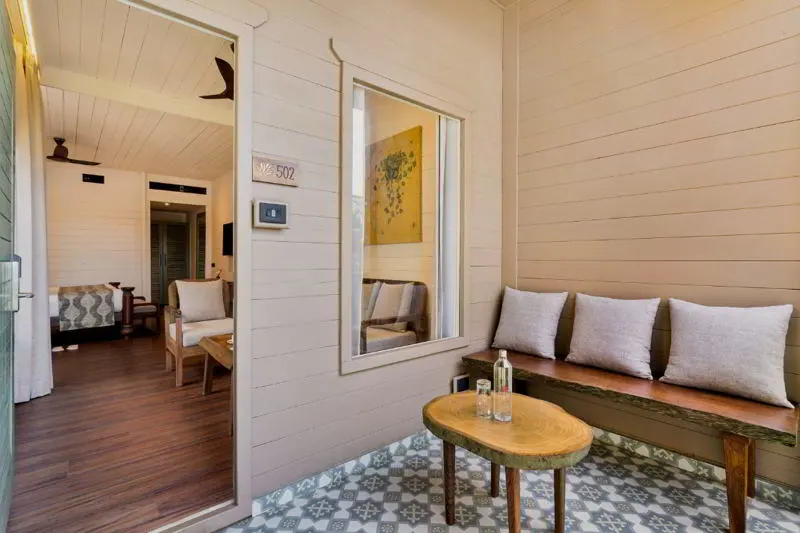
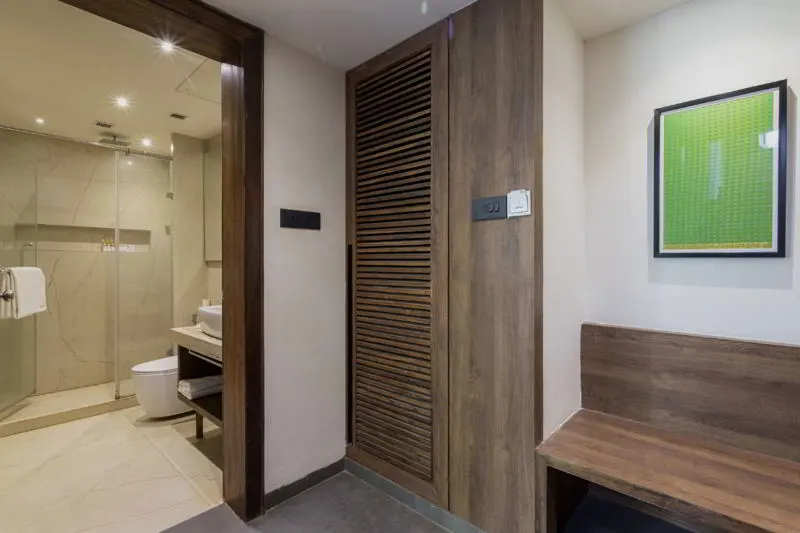
The Cocowood Cottages are simple, comfortable, and thoughtfully put together. They have a natural, grounded feel, with king-sized beds, soft linens, and clean marble bathrooms. Each cottage has its own balcony, looking out over the gardens or the calm rivulet nearby. You’ll have air conditioning, a television, minibar, and Wi-Fi, but many people find they don’t reach for their devices much once they’re here. The space itself encourages you to unplug.
Luxury Ocean View Rooms
If you want something a bit more open and expansive, the Ocean Palms Luxury Rooms overlook the meeting point of the Mandrem River and the Arabian Sea. Mornings here are quiet and beautiful. You can watch the light change over the water, sit with a cup of tea, or move through a gentle yoga practice on your balcony while the day begins. The rooms are spacious and well designed, with dark wood details and comfortable furnishings that make it easy to relax, reflect, and simply be.
At Riva, the surroundings quietly support the work you’re doing, without trying too hard. Everything is close, simple, and easy to settle into.
You can walk straight from the resort onto Mandrem’s quiet beach. No roads, no crowds. Just sand and sea.
There’s a calm swimming pool where some people swim slowly, others just float and breathe.
The Ayurvedic spa is run by trained therapists who work in a steady, traditional way.
There’s a dedicated space for yoga therapy, used in the mornings and evenings when the air is cooler and quieter.
Meals are prepared with care, focusing on nourishment rather than heaviness.
Private sunbeds on the beach give you a place that feels like your own.
Kayaking on the rivulet is gentle and unhurried, more reflective than adventurous.
And throughout the gardens, there are small, quiet corners where you can sit, write, or do nothing at all.
One small detail many people remember is the floating breakfast by the pool. It’s simple, but it brings a sense of ease. A reminder that even while healing, there’s still room for comfort, pleasure, and care.

The Retreat Experience: Your 6-Day Journey

Day 1: Arrival & Emotional Grounding
Finding Solid Ground
Your time here begins quietly, from the moment you’re welcomed in. Once you’ve settled into your room, everyone gathers for an opening circle. There’s no expectation to share more than feels comfortable. It’s simply a space to say why you’ve come, in your own words. Many people feel a little nervous at first. By the end, there’s often relief in realizing you’re among others who understand, without needing much explanation.
In the afternoon, there’s gentle yoga. It isn’t about flexibility or getting anything right. It’s about returning to your body. When emotions feel heavy, it’s easy to disconnect from physical sensations. This practice is slow and supportive, guided by breath and simple movements that help you feel present again.
As the evening settles in, the group meets on the beach for a short guided meditation. The focus is on grounding and simply being here. Nothing to change. Nothing to let go of yet. Just sitting or standing with the sound of the waves, allowing yourself to be exactly as you are.
Day 2: Processing & Release
Honoring Your Emotions
This is when things start to go a little deeper. The morning therapy session is about making space for the emotions that are often pushed aside. Anger, grief, betrayal, sadness. None of these are treated as problems to fix. They’re seen for what they are—signals that something important needs attention.
You’ll be guided to understand the difference between feeling an emotion and getting lost in it. Emotions need to move to change. When they’re held in or ignored, they tend to stay stuck. The work here is gentle and grounded, helping you feel what’s there without being overwhelmed by it.
In the afternoon, there’s restorative spa therapy. The treatment is chosen to help release tension the body has been carrying, sometimes for a long time. Our therapists work with the understanding that stress, grief, and fear don’t just live in the mind. They settle into the gut, the nervous system, the muscles. These sessions support both the body and the quieter layers beneath it.
The evening is unstructured. You might write, walk along the beach, or simply rest. Many people say this is the day they finally let themselves cry without feeling the need to explain. Or feel anger without judging it. It’s a day of allowing things to be felt, just as they are.
Day 3: Building Resilience
Discovering Your Strength
Today shifts the focus from sitting with pain to building the strength to move forward. The morning workshop looks at the practical side of breakup recovery. What happens when you go home. How to set boundaries with an ex. How to deal with family opinions. How to rebuild daily routines when everything feels different. These are real situations, and they’re talked through in a grounded, usable way.
This isn’t about pretending everything is fine or forcing positivity. Your pain isn’t brushed aside. Instead, you start to understand your patterns, notice what triggers you, and figure out what actually helps in your specific situation. The goal is resilience that feels real, not forced.
In the afternoon, the yoga practice becomes a little more active. Still supportive, but stronger. Many people are surprised by what their body can handle, especially after feeling low for a while. It often becomes a quiet reminder that there’s more strength there than you realized. Breathwork follows, offering simple tools to help manage anxiety and emotional overload when it shows up.
In the evening, there’s a session on nourishment and emotional wellbeing. When emotions run high, eating habits often change. Some people lose their appetite. Others reach for comfort food. This time is about learning how to care for yourself through food in a way that supports your energy and emotional balance, without rules or guilt.
Day 4: Inner Strength & Clarity
Building Your Future Self
By day four, things often feel a little different. The weight you arrived with isn’t gone, but it’s lighter. The morning therapy session turns toward what comes next. Not big plans or pressure, just an open look at who you’re becoming and what kind of life you want to move toward. It’s slow and thoughtful, led by curiosity rather than urgency.
In the afternoon, there’s a quiet walk along Mandrem Beach. Parts of the shore are full of small signs of life—crabs moving along the sand, birds circling above, fish eagles and kingfishers near the water. It’s a reminder that life keeps unfolding, even in times of change.
For some people, this walk brings up emotion. For others, it’s the first moment of real calm they’ve felt in a long time. Both are welcome. There’s no right way to experience it.
In the evening, you receive an Ayurvedic massage that goes a bit deeper than earlier in the week. By now, your body has started to soften, making it easier to release what’s been held underneath. Many people find they sleep more deeply this night, the kind of rest that hasn’t come easily for a while.
Day 5: Reconnection & Growth
Rediscovering Yourself
The morning yoga session is gentle but meaningful. It focuses on emotional balance. There are heart-opening movements that can feel tender after loss or betrayal, paired with grounding poses that help you feel steady again. It’s about finding that place inside you that’s still solid, even if things have been shaken.
Later, the group sharing circle often becomes one of the most memorable parts of the retreat. By now, trust has grown. People speak more openly. What’s shared doesn’t just come from the facilitators, but from each other. Many realize how healing it is to be heard fully, without being interrupted, judged, or given advice they didn’t ask for.
Meals that day are light, nourishing, and carefully prepared. They’re meant to support the body while still being enjoyable. You can eat with the group and feel that sense of connection, or choose a quiet table if you need some space. Both are respected.
The afternoon is open. You might rest, journal, or book an extra spa treatment. Some people take a short trip to nearby Arambol Beach or wander through local markets. Others stay close, stretched out in a hammock or sitting quietly as the sun goes down. There’s no schedule to follow here. Just space to listen to what you need.
Day 6: Integration & Moving Forward
Carrying Healing Home
The final morning begins quietly, with a one-on-one session focused on what comes next. You and your therapist talk through what you want to carry forward. What practices feel realistic to keep. How to meet hard moments when they show up again. What kind of support will help once you’re back in daily life. You leave this session with a clear, personal plan. Nothing generic. Just simple next steps that fit you.
The closing meditation and intention-setting circle brings everyone together one last time. People share what they’re taking with them, what they’re ready to let go of, and how they want to keep caring for themselves. It’s usually a mix of emotions. Some tears. Some laughter. Contact details exchanged. A real sense of gratitude for having shared this time.
The retreat ends with a farewell lunch. It’s unhurried, giving space for final conversations before people head their separate ways. Many stay in touch long after leaving, connected by the understanding that comes from walking through something meaningful together.
What Makes This Retreat Different?
Specialized Therapeutic Expertise
The people guiding this retreat aren’t just yoga teachers or wellness staff. They’re licensed therapists and counselors who work specifically with divorce, relationship trauma, and major life changes. They know what this territory feels like, and they’ve walked many people through it before.
This isn’t a general wellness retreat with a few sessions added on. Everything here is shaped around what you’re going through. The yoga is chosen with heartbreak and stress in mind. The therapy work looks at the thought patterns that often show up after separation. The group spaces are created so you feel understood, not explained to. Nothing is random or generic.
Holistic Mind-Body Integration
Healing after divorce takes time and care, on more than one level. It’s not enough to talk things through and then go back to your room. What comes up in therapy needs a place to land. The yoga helps release what gets stirred emotionally. Massage works with what the body has been holding onto. Food supports your energy when emotions feel heavy. Walks on the beach give everything space to settle.
This approach comes from a simple understanding: you’re not just a mind that needs insight or a body that needs rest. You’re a whole person. And healing works best when all of you is supported, not just one part.
The Healing Power of Community
Divorce can be incredibly lonely. It can feel like everyone else is moving on while you’re still trying to make sense of what just happened. One of the things people often don’t expect is how much it helps to be around others who are going through something similar.
There’s a quiet relief in telling your story and hearing “me too,” instead of being given advice. In laughing with people who understand why something that sounds small to others feels huge to you. In sitting beside someone who doesn’t need you to be strong or okay yet.
For many, these connections don’t end when the retreat does. Friendships form. Support continues. And knowing there are people who truly get it can make the path forward feel less heavy.
Privacy & Personal Space
At the same time, your need for privacy is respected. All therapy sessions are one-on-one and fully confidential. Your room is your own space to rest, reflect, or be quiet. Group activities are offered, but never required.
Some people heal through conversation and connection. Others need more silence and time alone to process. Both are welcome here. You’re free to move at your own pace, in the way that feels right for you.
Who This Retreat Serves
Pre-Divorce Contemplation
If you’re thinking about separation but haven’t decided yet, this retreat gives you space to sit with that honestly. No pressure. No one pushing you in a direction. Sometimes what’s needed is simply permission to listen to yourself. Other times, clarity comes once the emotional fog starts to lift.
This isn’t marriage counseling, and there’s no agenda about staying or leaving. The focus is on helping you understand what’s true for you, so any decision you make comes from clarity, not overwhelm or guilt.
Post-Divorce Recovery
If the separation has already happened, this retreat supports you through what comes after. Divorce doesn’t just end a relationship. It changes family roles, finances, friendships, and daily life, often all at once. That can feel like too much to hold alone.
Here, you work with both the practical and the emotional. Things like co-parenting communication and boundaries, alongside deeper work around grief, identity, and rebuilding a sense of self. It’s about finding your footing again, step by step.
Breakup Healing
Not every meaningful relationship ends in divorce. Long-term partnerships, engagements, and deeply committed relationships can leave just as much pain when they end. This retreat honors that. Your grief doesn’t need legal labels to be real.
Whatever form your loss has taken, it deserves care, time, and support.
Practical Considerations



Investment
€3700
Per Person Includes:
Private villa accommodation
All healing and therapy sessions
Daily yoga and meditation,
Energy healing, meals,
Basic spa services
Private couple
€ 5,000
per couple Includes:
Private villa accommodation
All healing and therapy sessions
Daily yoga and meditation,
Energy healing, meals,
Basic spa services

What's Included
Transformational Therapy Sessions:
✅ Heartbreak emotional release therapy with guided water healing and breathwork
✅ Trauma-informed life coaching: regaining confidence, overcoming abandonment wounds, breaking overthinking patterns
✅ Self-worth and identity rebuilding sessions (essential for post-divorce recovery)
✅ Healing inner child therapy for rejection wounds, fear of being alone, and trust issues
✅ Heart chakra activation meditation with breathwork, visualization, and Reiki
✅ Sacred cord-cutting ceremony to release painful connections and mental attachments
✅ Three-part forgiveness ritual: forgiving the person, yourself, and the situation
✅ Daily breathwork and emotional processing sessions
Accommodation & Dining:
✅ 5 nights in luxury Riva Beach Resort accommodation
✅ Daily gourmet vegetarian breakfast and lunch meals prepared with love
✅ Herbal teas and wellness drinks throughout the day
Additional Support:
✅ Goodbye blessing ceremony
✅ Personal progress booklet
✅ Post-retreat integration guidance

"Healing the Heart" Welcome Box:
✅ "New Beginnings" custom journal for processing emotions and visioning
✅ Self-love affirmation card deck
✅ Soothing essential oil blend (lavender, chamomile, rose)
✅ Handmade herbal calming tea mix from Goa
✅ Comfort items for emotional support
Free Dolphin Trip
✅ Private sunset healing ceremony on Mandrem Beach with releasing ritual
✅ Dolphin sightseeing boat trip (symbolizing moving forward)
✅ 60-minute complimentary Ayurvedic massage for nervous system healing
✅ Sacred temple visit for spiritual blessing
✅ One-way airport pickup

What's Not Included
Travel Costs:
✅ International flights to/from Goa
✅ Travel insurance (strongly recommended)
✅ Visa fees (if applicable to your nationality)
✅ Return airport transfer (available for €150)
Personal Expenses:
✅ Additional spa treatments beyond included massage
✅ Private yoga or meditation sessions
✅ Dinner
✅ Any alcoholic beverages (though resort is alcohol-free per wellness philosophy)
✅ Shopping or purchases at retail boutiques
✅ Telephone calls or premium WiFi services
✅ Laundry and dry cleaning services
✅ Gratuities for staff (appreciated but not required)
Cancellation Policy
✅ More than 90 days before start: Full refund minus €500 administrative fee
✅ 60-90 days before start: 50% refund
✅ 30-60 days before start: 25% refund
✅ Less than 30 days before start: No refund
✅ We strongly recommend purchasing travel insurance covering cancellations
Postponement: If you need to reschedule, one date change is permitted without penalty if requested more than 60 days before original start date (subject to availability).
Upcoming Dates
The Science Behind Retreat-Based Healing

It’s natural to wonder whether six days is really enough time to work through something as big as a divorce or a serious breakup. Most people feel skeptical at first. But there’s a reason stepping away like this can have such a strong effect. When you leave your usual environment and give yourself full space to focus on healing, things move differently.
A divorce retreat brings together several forms of support at once. You’re not just talking things through in therapy. You’re also working with the body through yoga, being held by a supportive group, and spending time in a calm, natural setting. All of these pieces work together. Healing happens on more than one level, at the same time.
Emotional work goes deeper when the body feels safe. When you’re well cared for, rested, and not constantly on alert, your nervous system can finally slow down. That’s when real processing happens. This is why the setting matters just as much as the therapy itself. The quiet, the care, the lack of pressure all help your system settle.
There’s also something powerful about physical distance. Being away from home, from the places and routines tied to your pain, gives you perspective. You start to see things more clearly. Thoughts loosen. New ideas surface. It’s often much easier to understand what you need next when you’re no longer surrounded by reminders of what hurt.
Life After the Retreat: Sustaining Your Healing
We’re very open about this: six days won’t magically fix everything. Healing after a divorce or a serious breakup doesn’t work like that. It’s a process, and it keeps unfolding long after you leave Mandrem.
What this time does offer is a real shift.
Most people leave feeling lighter. Not because everything is solved, but because the weight isn’t sitting so heavily anymore. There’s more clarity, more steadiness, and a bit more strength to face what’s next.You’ll take home practical tools. Simple things you can actually use when emotions rise or days feel hard. Not theory. Real support for daily life.
There’s also a deeper understanding that starts to form. You begin to see your patterns more clearly. What you need. Who you are beneath the hurt.
The sense of connection matters too. Being around others who are walking a similar path reminds you that you’re not alone in this. That shared understanding can be grounding long after the retreat ends.
And then there’s hope. Not the forced kind, but the quiet kind that comes from experiencing that healing is possible. That you’re not broken. That you’re still worthy of care and love.
For many people, this week becomes a turning point. Not the end of the journey, but the moment they stop just getting through the days and start actually healing. The moment they remember they’re still whole, even though the relationship ended. The week they finally let themselves grieve, and then begin to rebuild from a more honest place.

Why Choose Goa for Your Healing Journey?
Goa has emerged as a premier wellness destination in recent years, with yoga retreats, meditation centers, and Ayurvedic resorts flourishing throughout the state. But what makes this particular region so conducive to healing?
Natural Beauty That Soothes the Soul
There’s something about being near water that settles people almost right away. The sound of the waves has its own rhythm. You don’t have to try to meditate. It just happens. Standing by the ocean, it’s easier to remember that what you’re carrying, as heavy as it feels, exists inside something much bigger. Mandrem Beach has that kind of calm. Gentle water, wide skies, and sunsets that slow everything down without asking anything from you.

Cultural Wisdom Meets Modern Comfort
Goa itself has a mix that feels surprisingly easy to be in. There’s a long history here, shaped by both Indian and Portuguese influences. For many visitors, it feels unfamiliar in a good way, but not overwhelming. Practices like yoga and Ayurveda aren’t treated as trends here. They’re part of everyday life, woven naturally into how retreats and wellness spaces work.
The Perfect Balance of Solitude and Community
Mandrem, in particular, strikes a rare balance. It’s quiet without being lonely. You can walk the beach on your own, think, breathe, and have space. And when you feel like being around people, there are others nearby who are also here for reflection and healing. Connection is there when you want it, without pressure.
Accessibility with Adventure
Even though Mandrem feels far removed from daily life, getting here is straightforward. Flights arrive regularly into Goa, and the area is well set up for wellness travelers. At the same time, there’s plenty to explore if you feel like it. Nearby beaches, small markets, temples, and pockets of nature are all close by. It feels like stepping out of the world for a moment, while still being gently connected to it.
The Importance of Intentional Healing Spaces
One of the hardest parts of a breakup or divorce is the pressure to “move on” before you’re ready. Friends may suggest you start dating again almost right away. Family might expect you to be done with the sadness. There’s this unspoken idea that you should get over it quickly, neatly, and without making anyone uncomfortable.
This retreat is the opposite of that. There’s no timeline here. No expectation to feel a certain way by a certain day. If you need to cry, there’s room for that. If you’re angry, that’s allowed too. If you feel lost or unsure, that’s okay. And if hope starts to show up, even quietly, that’s welcome as well.
Emotions don’t move on just because we tell them to. They change when they’re felt, expressed, and given space. When they’re pushed down, they tend to stay stuck. By setting aside real time for this, you give yourself permission to heal properly, not just cope or put on a brave face.
The length of the retreat matters too. Six days is enough time to drop your guard and get past surface-level reactions. But it’s not so long that it feels daunting or exhausting. The mix of private therapy, group time, body-based practices, and quiet, unstructured hours gives healing more than one way in. You’re not forced into a single path. You find what works for you, at your own pace.
Getting Here
Getting to Riva Beach Resort
By Air
Goa International Airport (Dabolim) is approximately 57 km from the resort. We can arrange private car transfers (€40 per person one-way), or you can hire a prepaid taxi at the airport. Journey time is roughly 1.5 hours.
Check-in & Check-out
✅ Check-in: Day 1 after 2:00 PM
✅Check-out: Day 6 before 11:00 AM
✅ Late check-out can sometimes be arranged based on availability
What to Pack
Essentials:
- Comfortable clothing for yoga (modest, breathable fabrics)
- Swimsuit and cover-up
- Sunscreen, hat, and sunglasses
- Light jacket for air-conditioned spaces
- Journal and pen (though these are provided)
- Any personal medications
- Comfortable walking shoes/sandals
Optional:
- Your favorite yoga mat (we provide these, but some prefer their own)
- Books for beach reading
- Camera
- Sarong or beach towel
What Not to Bring:
- Expectations of constant happiness (healing isn't linear)
- Pressure to "fix" yourself quickly
- Heavy laptop or work materials (this is your time)
Resort Facilities & Policies
- Free Wi-Fi throughout property (though we encourage digital detox)
- Laundry service available
- Safe deposit boxes in rooms
- 24-hour reception
- Doctor on call if needed
- Strictly non-smoking resort (designated areas available)
- Alcohol available for purchase but we encourage mindful consumption
- Quiet hours after 10:00 PM to respect all guests' healing
Best Time to Visit
November to February (Peak Season)
Perfect weather with temperatures 20-30°C (68-86°F), low humidity, and minimal rain. This is Goa's high season, so book early. Prices at higher end of range.
March to April (Excellent Season)
Warm and sunny with occasional heat. Less crowded than peak months. Good value pricing.
May to October (Monsoon Season)
We don't run programs during heavy monsoon months, though the landscape is beautifully green and dramatic if you visit during light monsoon periods.
Getting to Riva Beach Resort
From Dabolim Airport (Goa International Airport):
- Distance: Approximately 53-57 km
- Travel time: 60-90 minutes depending on traffic
- Cost: ₹1,300-1,700 INR (approximately €15-20)
- We arrange private airport transfers for all guests
From Mopa International Airport (New Goa Airport):
- Distance: Approximately 27 km
- Travel time: 35-45 minutes
- More convenient for North Goa destinations
- Private transfer available
From Panaji (State Capital):
- Distance: 29 km
- Travel time: 45 minutes
- Regular bus service available or private taxi
From Thivim Railway Station:
- Distance: 24 km
- Travel time: 35-40 minutes
- Nearest major railway connection
Climate & Best Time to Visit
The best time to visit Mandrem Beach is from November to February when the weather is comfortable, with temperatures ranging between 21°C and 32°C, making it ideal for outdoor activities.
Peak Season (November-February):
- Perfect weather: Warm days, cool evenings
- Ideal for all retreat activities—yoga, beach walks, outdoor dining
- Festivals and cultural vibrancy
- Our most popular booking period
Shoulder Season (October & March):
- Pleasant weather, fewer crowds
- Better rates available
- Still excellent for all activities
Off-Season (April-September):
- Quieter, more intimate atmosphere
- Significant discounts (up to 20% off)
- April-June: Warm but manageable with resort AC and pools
- Monsoon (July-September): Dramatic beauty, ideal for introspective work
- Note: Some water sports limited during monsoon
Making the Decision to Attend
If you're reading this far, you're likely seriously considering whether this retreat is right for you. Here are some questions to help you decide:
Are you ready?
You don't need to be "healed" already to attend—that's what the retreat is for. But you do need to be willing to engage in the process. If you're still in deep denial about your situation or actively trying to reconcile with your ex-partner, this might not be the right timing.
Do you have the practical support?
Can you take a week away from your responsibilities? If you have children, can childcare be arranged? If you're in the midst of legal proceedings, will taking this time create problems? The retreat is most beneficial when you can fully be present rather than constantly worrying about situations back home.
Does the investment feel aligned?
This retreat represents a significant financial investment. Does spending this amount on your healing feel right, or does it create stress that would counteract the benefits? We believe healing should be accessible, which is why we offer early booking discounts and payment plans, but it still needs to feel manageable for your situation.
Does the approach resonate?
We combine Western psychological approaches with Eastern wisdom practices. If you're completely skeptical about yoga or meditation, you might struggle to engage fully. Similarly, if you're looking for a purely spiritual approach without psychological framework, this might not be the right fit.
If you're still uncertain, we offer 20-minute complimentary consultation calls where you can speak with one of our facilitators, ask questions, and get a feel for whether this retreat aligns with your needs.
FAQ
Q: I'm worried about sharing personal details with strangers. How much do I have to disclose?
A: You control how much you share. Some participants are comfortable being very open; others prefer to listen and process privately. All group sharing is voluntary, and everything shared remains confidential within the group. Your individual therapy sessions are completely private.
Q: What if I'm not flexible enough for yoga?
A: Our yoga is designed for all body types and flexibility levels. This isn't about impressive poses or "perfect" practice—it's about reconnecting with your body and breath. Modifications are always offered, and you're encouraged to honor your edges.
Q: I'm vegetarian/vegan/have food allergies. Can you accommodate me?
A: Absolutely. We offer primarily plant-based cuisine with seafood options, and we can accommodate virtually all dietary restrictions. Please inform us of any allergies or requirements when booking.
Q: Will I be the only person dealing with my specific situation?
A: Each retreat typically includes 8-12 participants at various stages of separation or breakup. While specific circumstances differ, the emotional territory is similar. We've found this diversity of experience actually enriches the healing journey.
Q: What if I have an emotional breakdown during the retreat?
A: Emotional release is often part of healing and is completely welcome here. Our therapists are trained to hold space for intense emotions, and the entire environment is designed to be safe for authentic expression. That said, if you're currently in acute crisis, we may recommend additional support before attending.
Q: I'm concerned about the cost. Are payment plans available?
A: We offer payment plans for bookings made 90+ days in advance. Contact us directly to discuss options. We believe healing should be accessible and will work with you when possible.
Q: How many people attend each retreat?
A: We keep groups intentionally small—typically 8-12 participants—to ensure everyone receives adequate individual attention and the group maintains an intimate, safe feeling.
Taking the first step toward healing is often the hardest one. Admitting you need support can feel exposing. Putting time and energy into yourself might feel uncomfortable, especially if your confidence has taken a hit. And not knowing exactly how things will unfold can be unsettling.
What we’ve seen, again and again, is that once people move past that initial hesitation, something opens up. Not a quick fix or a forced sense of “being over it,” but real healing. The kind that helps you feel more like yourself again, steadier and more honest about what you need.
Your heartbreak isn’t something to rush or minimize. It deserves care, attention, and people who understand what this stage of life actually feels like. It also deserves time away from the usual demands, so you can focus on yourself without distraction.
The life you want after a breakup or divorce doesn’t begin with pretending you’re fine. It begins with choosing to take your healing seriously. This retreat can be that starting point, if and when you’re ready.
Retreats You Might be interested

6-Day Clarity, Healing, Purpose & Life Transitions Retreat Weligama sri lanka
6-Day Luxury Relationship Healing & Karma Balancing Retreat Dubai
